Two years ago, I was a process engineer in a manufacturing plant. I wore steel-toed boots, carried a clipboard, and spent my days optimizing cycle times and reducing scrap rates. Today, I build Node-RED modules for industrial IoT, maintain open-source packages, and write code that connects factory machines to dashboards and analytics systems.
This is the story of how I switched — what pushed me to leave, what I had to learn, what transferred surprisingly well, and what I’d tell someone considering the same move.
Why I Left Process Engineering#
It wasn’t dissatisfaction with the work. Manufacturing is fascinating — every day brings a different problem, and improvements have tangible, measurable impact. What frustrated me was the tooling.
The Spreadsheet Problem#
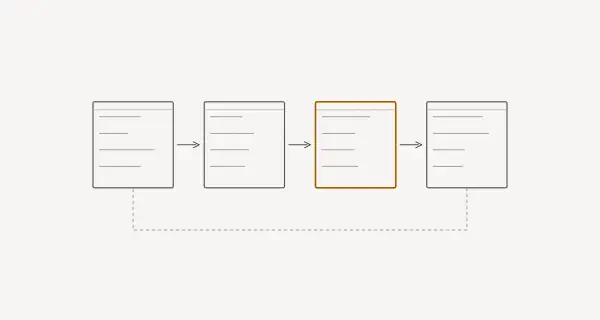
Every process improvement project I ran followed the same pattern:
- Data collection — walk to the machine, write down values, enter them into Excel
- Analysis — pivot tables, maybe a histogram
- Presentation — copy charts into PowerPoint
- Implementation — hope the operator follows the new SOP
- Monitoring — walk back to the machine in two weeks, check if things improved
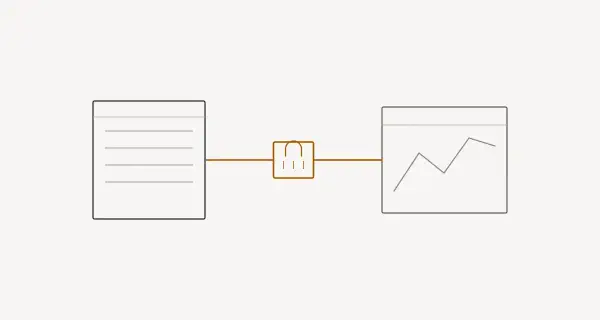
The data was there — machines had PLCs, sensors were measuring everything — but getting that data out of the machine and into something useful was either impossible or required a six-figure SCADA investment.
My frustration loop:
The Turning Point#
One Friday evening, I stumbled on a YouTube video about Node-RED. Someone had connected an OPC-UA server to an MQTT broker and was visualizing PLC data on a web dashboard — all with drag-and-drop visual programming. No six-figure vendor project. No six-month timeline. A Raspberry Pi and a weekend.
I installed Node-RED that night. By Monday morning, I had a prototype that read temperature values from our test lab’s Modbus sensor and displayed them on my phone. It was ugly, it was fragile, but it worked — and it took me 8 hours instead of 8 months.
That was the moment I realized: the bottleneck in manufacturing isn’t hardware or data. It’s the software layer between the machine and the human. And I wanted to be the one who builds that layer.
What Transferred from Industrial Engineering#
When I started learning software development, I expected my engineering background to be irrelevant. I was wrong. It turned out to be my biggest advantage.
1. Understanding the Domain#
Most software developers have never set foot on a factory floor. They don’t know what OEE is. They’ve never seen a PLC. They don’t understand why an operator won’t use a tool that requires more than three clicks.
I knew all of this. When I started building IIoT solutions, I didn’t have to guess what users needed — I had been the user.
2. Lean / Six Sigma Thinking#
Process engineering taught me to think in terms of value streams, waste elimination, and root cause analysis. This transfers directly to software:
| Manufacturing Concept | Software Equivalent |
|---|---|
| Value Stream Mapping | Data flow architecture |
| 5 Whys | Debugging methodology |
| Poka-yoke (mistake-proofing) | Input validation, type safety |
| Kaizen (continuous improvement) | Iterative development, CI/CD |
| Cycle time reduction | Performance optimization |
| Standard Work | Documentation, coding standards |
| PDCA (Plan-Do-Check-Act) | Agile sprints |
| Gemba (go to the source) | User research, talking to operators |
3. Knowing What Matters#
In manufacturing, you learn very quickly that not all data is equally important. Machine vibration trending upward over weeks? Critical. Ambient humidity in a climate-controlled room? Noise.
This helped me build better IIoT systems. I never built a “collect everything” platform. I always started with: What decision does this data support? What action will someone take based on this number?
4. Communication with Plant People#
I speak both languages. I can explain a REST API to a controls engineer, and I can explain OPC-UA to a web developer. In IIoT, this bridging skill is rare and incredibly valuable.
What I Had to Learn from Scratch#
Let’s be honest — the learning curve was steep. Here’s what was new territory for me:
JavaScript#
My first programming language beyond Excel VBA. I started with basic Node.js tutorials, then moved to Node-RED’s function nodes as a stepping stone.
My learning path:
Month 1-2: JavaScript basics (freeCodeCamp)
  - Variables, functions, loops, arrays
  - Callbacks, promises, async/await
  - JSON (this is everywhere in IIoT)

Month 3-4: Node.js
  - File system, HTTP, streams
  - npm, package.json, modules
  - Express.js (simple REST APIs)

Month 5-6: Node-RED development
  - Writing custom nodes
  - Understanding the Node-RED runtime
- Publishing to npmPython#
For data engineering and machine learning. I learned it through DataTalks.Club’s ZoomCamps — free, project-based courses that taught me more than any Udemy course.
DataTalks.Club ZoomCamps I completed:
| ZoomCamp | Topics |
|---|---|
| Data Engineering ZoomCamp | Docker, SQL, dbt, Spark, Kafka, Terraform, GCP |
| ML ZoomCamp | scikit-learn, XGBoost, deep learning, model deployment |
| MLOps ZoomCamp | MLflow, Prefect, model monitoring, experiment tracking |
All free. All project-based. All excellent.
Git & Version Control#
Coming from “Final_Report_v3_FINAL_REVISED_v2.docx” culture, Git was a revelation. Understanding branches, commits, and merge requests took a few weeks, but it changed how I think about all work, not just code.
Docker & Containers#
This was the biggest force multiplier. Instead of “works on my machine,” I could package an entire Node-RED setup — with all dependencies, custom nodes, and configuration — into a Docker image that runs anywhere.
# Before Docker:
# "To run my tool, install Node.js 18, then npm install these 15 packages,
#  then configure settings.js, then..."

# After Docker:
docker compose up -d
# Done.
Cloud Infrastructure#
AWS, Azure, and GCP basics. Not deep expertise — enough to deploy a container, set up an IoT hub, and manage credentials. For manufacturing, most infrastructure is still on-premise, but the cloud skills helped me understand modern deployment patterns.
The Learning Strategy That Worked#
I tried a lot of things. Udemy courses, YouTube tutorials, books, bootcamp-style programs. Here’s what actually moved the needle:
1. Solve a Real Problem First#
Don’t learn Docker in the abstract. Have a problem — “I need to deploy Node-RED with my custom nodes to three different machines” — and then learn Docker to solve it.
Every meaningful skill I acquired was driven by a concrete need. I learned OPC-UA because I needed to read data from a Siemens PLC. I learned MQTT because I needed pub/sub for sensor data. I learned GitHub Actions because I was tired of deploying manually.
2. Build Open Source#
Publishing npm packages forced me to write proper code. When strangers on the internet use your module, you learn very quickly about:
- Documentation (because people read it)
- Error handling (because people hit edge cases you never imagined)
- Testing (because you can’t manually test every PR)
- API design (because breaking changes make people angry)
- Semantic versioning (because people depend on your version numbers)
My open-source packages became my portfolio, my teacher, and my proof of competence — all in one.
3. DataTalks.Club ZoomCamps#
I cannot overstate how valuable these were. Each ZoomCamp is a 2-4 month program with weekly lessons, homework projects, and a capstone project. They’re free, entirely online, and taught by practitioners.
For someone coming from engineering into data/software, this is the best learning path I’ve found. The projects give you real portfolio pieces, and the community is incredibly supportive.
4. Read Other People’s Code#
I spent hours reading the source code of popular Node-RED contrib packages. How does node-red-contrib-opcua handle connections? How does node-red-dashboard manage state? Reading code teaches you patterns that tutorials never cover.
Key Lessons#
Domain Knowledge is Underrated#
In tech, there’s a bias toward pure engineering skill. But in IIoT, knowing the difference between a VFD and a servo matters more than knowing the difference between map and reduce. Manufacturing domain knowledge takes years to build. JavaScript takes months.
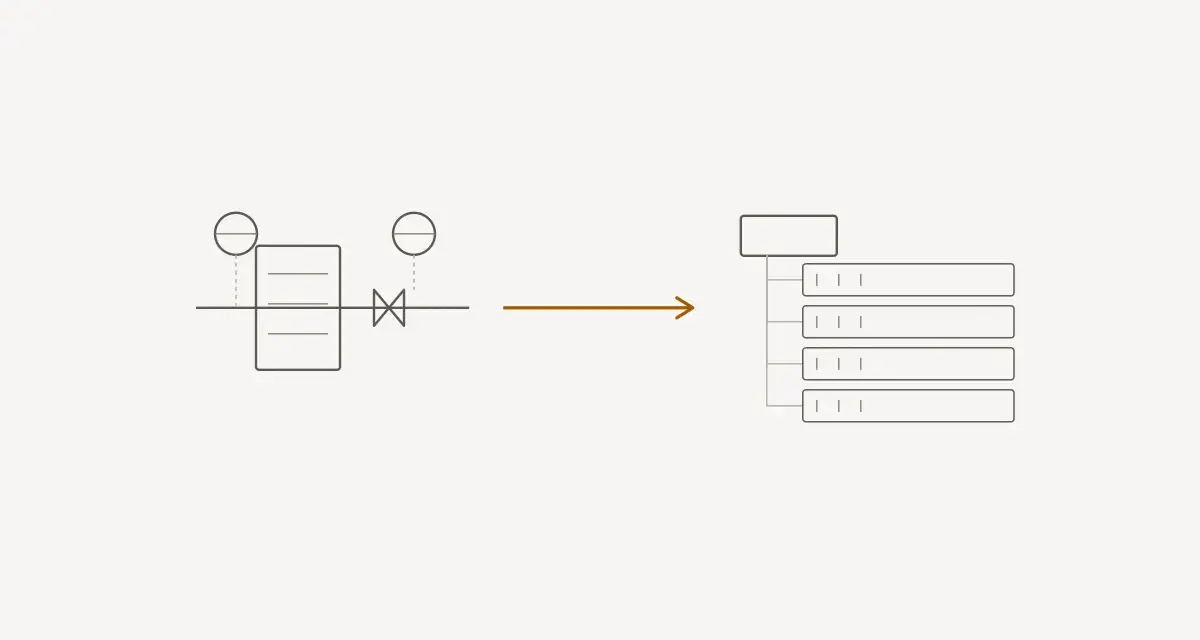
The IIoT developer skill stack:
Most developers have the bottom layer. Few have the top. Having all three is rare.
Start with Solving Real Problems#
Don’t build a “platform.” Build a solution to one specific problem. “I need to see the temperature of oven 3 on my phone” is a better starting point than “I’m going to build an IIoT middleware layer.” The platform emerges from the solutions.
Open Source as Portfolio#
When I applied for my first IIoT developer role, I didn’t have a CS degree. I didn’t have three years of professional development experience. But I had five npm packages with real users, real tests, and real documentation. That mattered more than any certificate.
Imposter Syndrome is Normal#
For the first six months, I felt like a fraud. I was a process engineer pretending to be a developer. The code I wrote was ugly. My Git history was embarrassing. I had to Google basic syntax constantly.
Here’s what I wish I’d known: every developer Googles basic syntax. Every developer writes ugly code at first. The difference between a beginner and an experienced developer isn’t that they know everything — it’s that they know how to find answers faster.
The Factory Floor is Your Superpower#
Every time I visit a customer’s plant, I understand things that pure software developers miss. I notice that the operator can’t use a touchscreen with gloves on. I know that the WiFi drops out near the welding robots. I understand that a 30-second data delay isn’t acceptable when you’re running a batch process.
This isn’t soft skill trivia. It’s the difference between building software that gets used and software that gets uninstalled.
Advice for Engineers Considering the Switch#
Do You Even Need to Fully Switch?#
Maybe you don’t need to become a full-time developer. A process engineer who can build Node-RED dashboards and connect PLCs is incredibly valuable — maybe more valuable than a pure developer. Consider hybrid roles: “automation engineer with software skills” or “IIoT specialist.”
Practical Steps#
Install Node-RED today. Spend one weekend building something — anything. Read a sensor, visualize data, send an alert. Prove to yourself that you can.
Learn JavaScript fundamentals. Not React, not Angular — plain JavaScript. You’ll need it for Node-RED function nodes and custom node development. freeCodeCamp’s curriculum is excellent and free.
Learn Git. Version control is non-negotiable. It takes two weeks to get comfortable with the basics (
add,commit,push,pull,branch,merge).Join DataTalks.Club. Enroll in their next ZoomCamp. The Data Engineering ZoomCamp is the best starting point — it covers Docker, SQL, Python, and cloud basics in a structured, project-based format.
Build something open-source. Write a Node-RED node for a protocol you understand. Publish it on npm. It doesn’t have to be perfect — it has to exist.
Talk to developers. Find the software team at your company. Buy them coffee. Ask what they’re working on. Offer your domain expertise in exchange for code reviews.
Don’t quit your day job (yet). Build your skills on the side. When your side projects are more interesting than your day job and you have a portfolio to prove it, then consider the switch.
Two Years Later#
I still wear steel-toed boots sometimes — when I visit customer plants to understand their processes before writing code. The clipboard has been replaced by a laptop, but the mindset is the same: observe, measure, improve.
The best part? The problems are the same problems I cared about as a process engineer — reducing waste, improving uptime, giving operators the information they need. I’m just solving them with different tools now.
If you’re an engineer sitting in a plant, frustrated by spreadsheets and manual data collection, staring at a PLC that you know holds valuable data — you’re closer to becoming an IIoT developer than you think. The domain knowledge is the hard part. The code is just a tool. And tools can be learned.