Kafka has a reputation problem in manufacturing. Half the people I talk to think it’s the answer to everything; the other half think it’s a heavyweight cloud thing that has no business near a PLC. Both are wrong. Kafka is a fantastic tool for a specific set of shop-floor problems — and a terrible choice for the rest. This post is about telling the two apart, and then actually wiring Kafka into a Node-RED stack once you’ve decided it fits.
When Kafka Actually Belongs in a Factory#
Kafka is a distributed, append-only commit log. That single property — a durable, replayable, ordered log of events — is what makes it valuable, and it maps to exactly three manufacturing problems:
| Problem | Why Kafka fits |
|---|---|
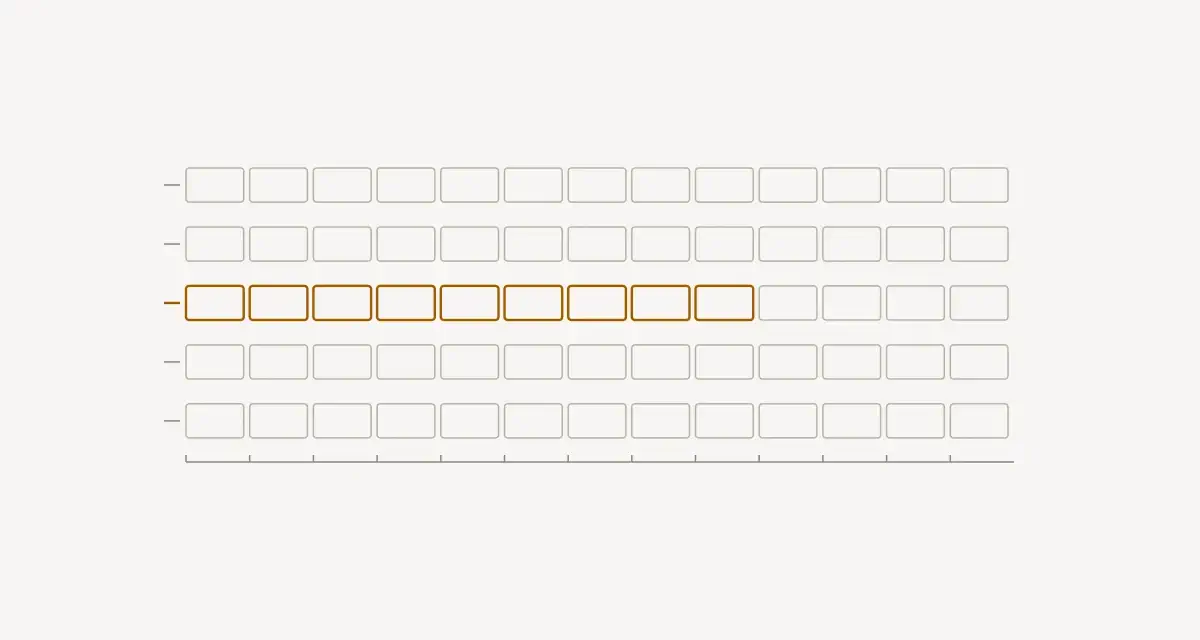
| Replay & reprocessing | A new analytics model needs three months of historical sensor data, run through the same pipeline as live data. Kafka keeps the log; you rewind the consumer. |
| Fan-out to many consumers | One vibration stream feeds a dashboard, an ML model, a data lake, and an MES — each at its own pace, none blocking the others. |
| Buffering bursty, high-volume data | A line produces 50k events/second during a run. Kafka absorbs the spike; downstream systems drain it when they can. |
If your problem isn’t one of those, Kafka is probably overkill. Sending a single setpoint to a PLC? Use OPC-UA. Lightweight device telemetry over a flaky cellular link? Use MQTT. Low-latency request/reply between services? NATS will be simpler and faster.
Kafka vs NATS vs MQTT — The 30-Second Version#
I covered the protocol landscape in detail in MQTT vs Sparkplug B vs NATS vs OPC-UA. Here’s where Kafka slots in:
| Dimension | MQTT | NATS (JetStream) | Kafka |
|---|---|---|---|
| Primary job | Device telemetry | Service messaging | Event log / streaming |
| Retention | None (last value) | Hours–days | Days–forever |
| Replay | No | Yes | Yes (first-class) |
| Throughput | Moderate | High | Very high |
| Footprint | Tiny | Small | Heavy (JVM) |
| Ordering | Per-topic | Per-stream | Per-partition |
| Best edge fit | Sensor → broker | Edge mesh | Plant/cloud aggregation |
The pattern I keep coming back to: MQTT/Sparkplug at the device edge, NATS for the edge mesh, Kafka at the plant or cloud tier where you aggregate, store, and fan out. They’re complementary, not competing.
Mapping Kafka Concepts to the Factory#
Kafka’s vocabulary is abstract. Here’s the translation that made it click for me:
| Kafka term | Factory analogy |
|---|---|
| Topic | A logical stream — e.g. line3.vibration, line3.oee |
| Partition | A parallel lane within a topic — usually one per machine or sensor group |
| Offset | The position in the log — “I’ve processed up to event 1,847,200” |
| Producer | The edge node publishing readings |
| Consumer group | A team of workers sharing the load of one topic |
| Retention | How long the log keeps events before pruning |
The partitioning decision is the one that matters most. Ordering is only guaranteed within a partition, so if you need per-machine ordering, key your messages by machine ID. Don’t over-partition: 1 partition per machine is usually right; 200 partitions for a 12-machine line just adds rebalancing pain.
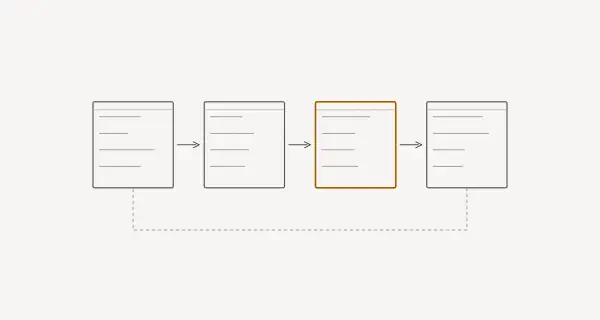
The magic of that diagram: the anomaly model can fall behind by an hour, get redeployed, and replay from where it left off — without the dashboard ever noticing. That decoupling is the whole point.
Wiring Kafka into Node-RED#
I built node-red-contrib-kafka-suite precisely because the existing Node-RED Kafka nodes didn’t handle Schema Registry, managed-service auth presets, or dual-backend (KafkaJS / @confluentinc/kafka-javascript) selection cleanly. Here’s the minimal producer setup.
1. Install#
cd ~/.node-red
npm install node-red-contrib-kafka-suite
2. Configure the Broker Connection#
Kafka Broker Config
├── Brokers:        kafka-1:9092, kafka-2:9092, kafka-3:9092
├── Client ID:      line3-edge
├── Backend:        KafkaJS (pure JS) | @confluentinc/kafka-javascript (native librdkafka)
├── Security:
│   ├── Preset:     Confluent Cloud | Redpanda | Aiven | Self-managed
│   ├── SASL:       scram-sha-512
│   └── TLS:        enabled
└── Schema Registry: https://schema:8081  (optional, see below)
The preset dropdown matters more than it looks — getting SASL/TLS right for Confluent Cloud vs a self-managed Redpanda cluster is where most people lose an afternoon. The presets fill in the fiddly defaults.
3. Produce a Message#
Wire a function node into the Kafka producer:
// Key by machine ID so all events for a machine land in the same partition
msg.key = msg.payload.machineId;          // e.g. "M-1142"
msg.topic = "line3.vibration";
msg.payload = {
    machineId: msg.payload.machineId,
    rmsVelocity: msg.payload.rms,          // mm/s
    peakAccel: msg.payload.peak,           // g
    ts: new Date().toISOString()
};
return msg;
That’s it for fire-and-forget. But raw JSON on a Kafka topic is a time bomb — which brings us to the part everyone skips.
Schema Registry — The Part That Saves You Later#
Six months from now, someone renames rmsVelocity to rms_velocity in the producer, and three downstream consumers silently break. A Schema Registry prevents this by enforcing a contract: every message is validated against a registered schema, and schema evolution is checked for compatibility before a new version is allowed.
An Avro schema for the vibration event:
{
  "type": "record",
  "name": "VibrationEvent",
  "namespace": "shopfloor.line3",
  "fields": [
    { "name": "machineId",   "type": "string" },
    { "name": "rmsVelocity", "type": "float",  "doc": "mm/s" },
    { "name": "peakAccel",   "type": "float",  "doc": "g" },
    { "name": "ts",          "type": "string", "doc": "ISO-8601 UTC" }
  ]
}
With kafka-suite, you point the producer at the registry and select a compatibility mode:
| Compatibility | What it allows | Use when |
|---|---|---|
| BACKWARD | New schema can read old data | Consumers upgrade first (most common) |
| FORWARD | Old schema can read new data | Producers upgrade first |
| FULL | Both directions | Strict, regulated environments |
| NONE | Anything goes | Never, in production |
Default to BACKWARD. Adding an optional field with a default and removing a field are both backward-compatible changes; the breaking change is adding a required field without a default, which the registry will reject at deploy time instead of breaking consumers in production.
Delivery Guarantees — Don’t Lose a Part Count#
Vibration samples are disposable; you can drop one. A part-count increment is not — losing it corrupts your OEE. Match the guarantee to the data:
Producer config per use case:

  Disposable telemetry (vibration, temp):
    acks: 1            # leader ack only — fast, occasional loss OK

  Critical counters (parts, batches):
    acks: all          # all in-sync replicas confirm
    enable.idempotence: true
    retries: 10
    max.in.flight.requests.per.connection: 5
enable.idempotence: true gives you exactly-once produce semantics (no duplicates from retries) with negligible throughput cost on modern Kafka. There is rarely a reason not to set it for counter-type data.
Common Pitfalls#
Pitfall 1: One Message Per Sensor Reading#
Kafka loves throughput but hates tiny messages sent one at a time — the per-message overhead dominates. Batch. Buffer readings in Node-RED and send arrays, or let the client’s linger.ms (5–20 ms) and batch.size do the batching for you. A 10 ms linger can 10× your effective throughput with negligible latency cost.
Pitfall 2: Treating Kafka as a Database#
Kafka is a log, not a key-value store. “Give me the current temperature of machine M-1142” is the wrong question to ask Kafka. Pipe the stream into a state store (a time-series DB, or a Kafka Streams/ksqlDB materialized view) and query that.
Pitfall 3: Infinite Retention by Accident#
Default retention is 7 days, but it’s easy to set retention.ms: -1 “to be safe” and then watch your brokers fill up. Decide deliberately: hot topics 7–30 days, compacted topics for latest-state, and offload everything else to object storage via a sink connector.
Pitfall 4: Running ZooKeeper in 2026#
If you’re standing up a new cluster, use KRaft (Kafka’s built-in Raft consensus) — no separate ZooKeeper ensemble to operate. Every supported Kafka version now ships it. Lighter, fewer moving parts, especially welcome on a plant-tier server.
Pitfall 5: Putting Kafka at the Device Edge#
A JVM-based broker on a Raspberry Pi gateway is the wrong place. If you need log semantics at the edge, look at Redpanda (C++, no JVM, Kafka-API compatible) — but more often, MQTT or NATS at the edge feeding Kafka upstream is the cleaner architecture. See Docker vs K3s on the shop floor for where to draw the edge/plant line.
When NOT to Use Kafka#
Be honest with yourself. Skip Kafka if:
- You have one producer and one consumer — that’s a queue, not a streaming platform.
- You need sub-millisecond request/reply — use NATS.
- Your total volume is a few thousand messages a day — MQTT + a database is far less to operate.
- Nobody on the team will own it. Kafka rewards operational maturity and punishes neglect. An unmaintained cluster is a liability.
Conclusion#
Kafka earns its place in manufacturing when you need a durable, replayable event log that fans out to many independent consumers at high volume — historian backfills, multi-model analytics, plant-to-cloud aggregation. It is the wrong tool for simple device telemetry or low-latency control, where MQTT and NATS are lighter and faster.
If you do reach for it: key your partitions by machine for ordering, enforce contracts with a Schema Registry from day one, set delivery guarantees per data criticality, and keep the broker at the plant or cloud tier — not on a gateway. Get those four things right and Kafka becomes the backbone that lets every other system on the shop floor read the same truth, at its own pace.