MQTT got us far. Every IIoT project I’ve worked on started with Mosquitto, some topics, and QoS 1. It works — until you need message replay, exactly-once delivery, or synchronizing configuration across 30 factory sites. Then you start bolting on Kafka for persistence, Redis for key-value state, and a custom sync mechanism for edge-to-cloud. Three systems to operate, three failure modes to debug at 2 AM.
NATS replaces all three. It’s a single binary that handles pub/sub messaging, persistent streams (JetStream), key-value stores, and edge-to-cloud synchronization (leaf nodes) — all with built-in clustering and zero external dependencies.
This post walks through a complete NATS-based architecture for industrial IoT.
Architecture Overview#
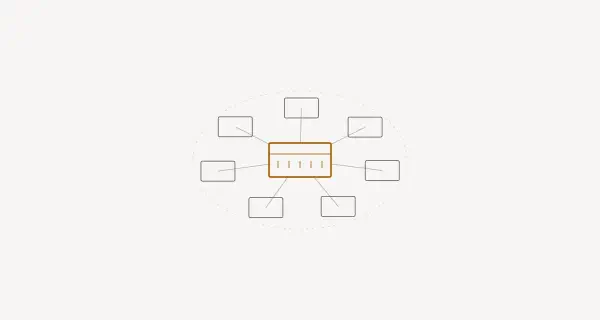
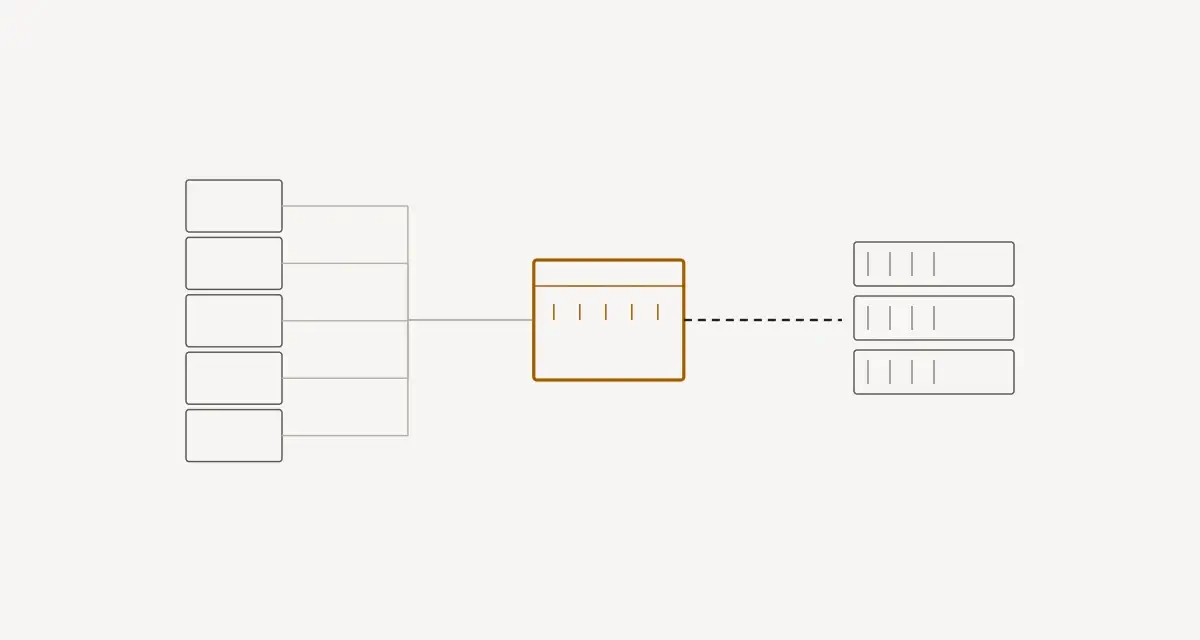
Each factory runs a local NATS server as a leaf node. Sensors and PLCs publish to the local server with sub-millisecond latency. The leaf node selectively forwards messages to the cloud cluster over a single TLS connection — NAT-friendly, firewall-friendly, resumable on disconnect.
Why NATS Over MQTT + Kafka?#
| Capability | MQTT + Kafka | NATS (with JetStream) |
|---|---|---|
| Pub/Sub | MQTT broker | NATS core |
| Persistent streams | Kafka | JetStream |
| Key-value store | Redis / etcd | NATS KV |
| Edge-to-cloud sync | Custom bridge | Leaf nodes (built-in) |
| Clustering | MQTT: limited, Kafka: ZooKeeper/KRaft | Built-in RAFT |
| Message replay | Kafka (complex consumer groups) | JetStream (simple) |
| Exactly-once | Kafka (idempotent producer) | JetStream (dedup window) |
| Dependencies | 3 systems (MQTT, Kafka, Redis) | 1 binary |
| Memory footprint | Kafka: 1+ GB, MQTT: 50 MB, Redis: 100 MB | 50–200 MB total |
| Ops complexity | High (3 systems to monitor, upgrade, backup) | Low (1 system) |
The operational argument is the strongest: running and monitoring one system is fundamentally simpler than running three.
Subject Naming Convention#
A well-designed subject hierarchy is critical. For industrial IoT, I use this pattern:
{org}.{site}.{area}.{line}.{machine}.{sensor}.{metric}

Examples:
  acme.munich.hall-a.line-1.cnc-001.spindle.vibration.rms
  acme.munich.hall-a.line-1.cnc-001.spindle.vibration.spectrum
  acme.munich.hall-a.line-1.cnc-001.motor.current
  acme.munich.hall-a.line-1.cnc-001.coolant.temperature
acme.munich.hall-a.line-1.cnc-001.status.operational_stateWildcards#
NATS supports two wildcards that make this hierarchy powerful:
acme.munich.hall-a.line-1.*.spindle.vibration.rms
  → All machines on line 1, spindle vibration RMS

acme.munich.hall-a.>
  → Everything from Hall A (all lines, machines, sensors)

acme.*.*.*.*.*.temperature
  → All temperature readings across all sites
The * matches a single token, > matches one or more tokens (only at the end). This lets cloud analytics subscribe to broad patterns while edge devices publish to specific subjects.
Reserved Subjects#
$SYS.>                     → NATS system events
$JS.>                      → JetStream internal
$KV.>                      → Key-value store subjects (KV_* internal streams)

acme.*.config.>            → Machine configuration (KV-backed)
acme.*.alert.>             → Alert messages (priority routing)
acme.*.command.>           → Commands from cloud to edge
acme.*.model.>             → ML model updates
JetStream: Persistent Streams#
Core NATS is fire-and-forget — if nobody’s listening, the message is lost. JetStream adds persistence and replay, turning NATS into an event log.
Stream Configuration#
{
  "name": "TELEMETRY",
  "subjects": ["acme.*.*.*.*.*.vibration.>", "acme.*.*.*.*.*.temperature"],
  "retention": "limits",
  "max_bytes": 10737418240,
  "max_age": 604800000000000,
  "storage": "file",
  "num_replicas": 3,
  "discard": "old",
  "duplicate_window": 120000000000,
  "compression": "s2"
}
This stream captures all vibration and temperature data, retains it for 7 days (or until 10 GB is reached), deduplicates messages within a 2-minute window, and replicates across 3 nodes with S2 compression.
Consumer Types#
| Consumer Type | Use Case | Behavior |
|---|---|---|
| Push | Real-time dashboard | NATS delivers messages as they arrive |
| Pull | Batch analytics | Application pulls N messages at a time |
| Durable | Critical processing | Survives restarts, resumes from last ack |
| Ephemeral | Monitoring, debugging | Disappears when client disconnects |
Go Producer Example#
package main

import (
    "encoding/json"
    "fmt"
    "time"

    "github.com/nats-io/nats.go"
    "github.com/nats-io/nats.go/jetstream"
)

type TelemetryMessage struct {
    MachineID string    `json:"machine_id"`
    Sensor    string    `json:"sensor"`
    Value     float64   `json:"value"`
    Unit      string    `json:"unit"`
    Timestamp time.Time `json:"timestamp"`
    Quality   string    `json:"quality"`
}

func main() {
    nc, err := nats.Connect(
        "nats://localhost:4222",
        nats.RetryOnFailedConnect(true),
        nats.MaxReconnects(-1),
        nats.ReconnectWait(2*time.Second),
    )
    if err != nil {
        panic(err)
    }
    defer nc.Close()

    js, err := jetstream.New(nc)
    if err != nil {
        panic(err)
    }

    msg := TelemetryMessage{
        MachineID: "cnc-001",
        Sensor:    "spindle",
        Value:     2.45,
        Unit:      "mm/s",
        Timestamp: time.Now().UTC(),
        Quality:   "good",
    }

    data, _ := json.Marshal(msg)
    subject := fmt.Sprintf("acme.munich.hall-a.line-1.%s.spindle.vibration.rms",
        msg.MachineID)

    ack, err := js.Publish(subject, data,
        jetstream.WithMsgID(fmt.Sprintf("%s-%d", msg.MachineID, msg.Timestamp.UnixNano())),
    )
    if err != nil {
        panic(err)
    }
    fmt.Printf("Published seq=%d stream=%s\n", ack.Sequence, ack.Stream)
}
Python Consumer Example#
import asyncio
import json
import nats
from nats.js.api import ConsumerConfig, DeliverPolicy

async def main():
    nc = await nats.connect("nats://localhost:4222")
    js = nc.jetstream()

    config = ConsumerConfig(
        durable_name="analytics-consumer",
        deliver_policy=DeliverPolicy.ALL,
        filter_subject="acme.munich.hall-a.>",
        ack_wait=30,
        max_deliver=3,
    )

    sub = await js.subscribe(
        "acme.munich.hall-a.>",
        stream="TELEMETRY",
        config=config,
    )

    async for msg in sub.messages:
        data = json.loads(msg.data.decode())
        print(f"{msg.subject}: {data['value']} {data['unit']}")
        await msg.ack()

asyncio.run(main())
KV Store: Machine Configuration#
NATS KV is a key-value store built on JetStream. Perfect for storing machine configuration that needs to sync between edge and cloud:
import asyncio
import json
import nats

async def main():
    nc = await nats.connect("nats://localhost:4222")
    js = nc.jetstream()

    kv = await js.create_key_value(
        name="MACHINE_CONFIG",
        history=5,
        ttl=0,
    )

    config = {
        "machine_id": "cnc-001",
        "vibration": {
            "sample_rate": 25600,
            "fft_size": 1024,
            "alert_threshold_rms": 4.5,
            "bearing_type": "6205",
        },
        "maintenance": {
            "last_service": "2026-02-15",
            "next_scheduled": "2026-04-15",
            "operating_hours": 4280,
        },
    }

    await kv.put("cnc-001", json.dumps(config).encode())

    entry = await kv.get("cnc-001")
    data = json.loads(entry.value.decode())
    print(f"Machine: {data['machine_id']}, Hours: {data['maintenance']['operating_hours']}")

    watcher = await kv.watch("cnc-*")
    async for update in watcher:
        if update is None:
            continue
        print(f"Config changed: {update.key} rev={update.revision}")

asyncio.run(main())
When a maintenance engineer updates machine configuration in the cloud dashboard, the KV change propagates to the edge leaf node automatically. The edge Node-RED flow watches for KV changes and reconfigures the monitoring pipeline on the fly.
Leaf Nodes: Edge-to-Cloud Sync#
Leaf nodes are the killer feature for industrial IoT. A leaf node is a local NATS server that connects to a remote cluster and selectively synchronizes subjects:
Edge NATS Configuration#
# /etc/nats/edge-server.conf

server_name: factory-munich-edge

listen: 0.0.0.0:4222

jetstream {
    store_dir: /data/nats/jetstream
    max_mem: 256MB
    max_file: 5GB
}

leafnodes {
    remotes [
        {
            url: "tls://cloud-nats.company.com:7422"
            credentials: "/etc/nats/creds/factory-munich.creds"

            # Restrict which subjects cross the leaf link
            deny_imports: ["_INBOX.>"]
            deny_exports: []
        }
    ]

    # Reconnect behaviour for the leaf link
    reconnect_delay: "5s"
}

authorization {
    users: [
        { user: "node-red", password: "$NODERED_PASS",
          permissions: {
            publish: ["acme.munich.>"]
            subscribe: ["acme.munich.>", "acme.*.config.>", "acme.*.command.>"]
          }
        },
        { user: "plc-gateway", password: "$PLC_PASS",
          permissions: {
            publish: ["acme.munich.hall-a.>"]
            subscribe: []
          }
        }
    ]
}
One block only.
leafnodes(like every top-level block) may appear once — a secondleafnodes { ... }later in the file silently replaces the first instead of extending it, takingremoteswith it. The config still passesnats-server -t, and the gateway then quietly never connects to the cloud. Same rule forjetstreamandauthorization.
Important: A leaf node connection alone does not buffer locally-published core-NATS messages and replay them after an outage. Plain core-NATS traffic that can’t reach the cloud while the link is down is simply lost. Resilient edge→cloud delivery requires a local JetStream stream that is mirrored or sourced to an upstream cloud stream — that’s what provides the store-and-forward semantics.
Mirroring is store-and-forward and recovers automatically from connection drops. Create the stream on the cloud cluster, then a mirror (or source) of it on the edge, referencing the upstream
domain:
// Edge stream that mirrors the cloud TELEMETRY stream
{
  "name": "TELEMETRY_EDGE",
  "mirror": {
    "name": "TELEMETRY",
    "external": {
      "api": "$JS.cloud.API"
    }
  },
  "storage": "file",
  "max_bytes": 5368709120
}
The external.api prefix ($JS.<domain>.API) points the mirror at the cloud
JetStream domain across the leaf link. Use sources instead of mirror when you
need to aggregate several upstream streams into one. Publishers on the edge write
to the local JetStream stream; the mirror/source machinery replays anything queued
locally once the cloud link is restored — in order and without gaps.
What Happens When the Network Drops?#
This is where NATS shines compared to MQTT bridges — provided telemetry flows through a mirrored/sourced JetStream stream (see the warning above). The diagram below assumes the edge writes to a local JetStream stream that mirrors the cloud; plain core-NATS publishes would simply be dropped during the outage.
Local edge applications (Node-RED dashboards, local alerts) continue working because they subscribe to the local NATS server. The cloud just receives data late — but in order and without gaps.
Docker Compose: Local Development Cluster#
Test the full architecture locally:
services:
  nats-cloud-1:
    image: nats:2.10-alpine
    command: >
      --name cloud-1
      --cluster_name cloud
      --cluster nats://0.0.0.0:6222
      --routes nats://nats-cloud-2:6222,nats://nats-cloud-3:6222
      --js
      --sd /data
      --leafnodes nats://0.0.0.0:7422
    volumes:
      - cloud1-data:/data
    ports:
      - "4222:4222"
      - "8222:8222"

  nats-cloud-2:
    image: nats:2.10-alpine
    command: >
      --name cloud-2
      --cluster_name cloud
      --cluster nats://0.0.0.0:6222
      --routes nats://nats-cloud-1:6222,nats://nats-cloud-3:6222
      --js
      --sd /data
    volumes:
      - cloud2-data:/data

  nats-cloud-3:
    image: nats:2.10-alpine
    command: >
      --name cloud-3
      --cluster_name cloud
      --cluster nats://0.0.0.0:6222
      --routes nats://nats-cloud-1:6222,nats://nats-cloud-2:6222
      --js
      --sd /data
    volumes:
      - cloud3-data:/data

  nats-edge-munich:
    image: nats:2.10-alpine
    command: >
      --name edge-munich
      --js
      --sd /data
      --leafnodes "nats://nats-cloud-1:7422"
    volumes:
      - edge-munich-data:/data
    ports:
      - "4223:4222"
    depends_on:
      - nats-cloud-1

  nats-edge-berlin:
    image: nats:2.10-alpine
    command: >
      --name edge-berlin
      --js
      --sd /data
      --leafnodes "nats://nats-cloud-1:7422"
    volumes:
      - edge-berlin-data:/data
    ports:
      - "4224:4222"
    depends_on:
      - nats-cloud-1

  node-red:
    image: nodered/node-red:latest
    ports:
      - "1880:1880"
    volumes:
      - nodered-data:/data
    depends_on:
      - nats-edge-munich
    environment:
      - NATS_URL=nats://nats-edge-munich:4222

volumes:
  cloud1-data:
  cloud2-data:
  cloud3-data:
  edge-munich-data:
  edge-berlin-data:
  nodered-data:
docker compose up -d
# Verify cluster health
docker exec -it $(docker compose ps -q nats-cloud-1) \
nats server list
# Create the telemetry stream
docker exec -it $(docker compose ps -q nats-cloud-1) \
nats stream add TELEMETRY \
--subjects "acme.>" \
--retention limits \
--max-bytes 1GB \
--max-age 7d \
--storage file \
--replicas 3 \
--compression s2
# Publish from "edge munich" and consume from "cloud"
docker exec -it $(docker compose ps -q nats-edge-munich) \
nats pub acme.munich.hall-a.line-1.cnc-001.spindle.vibration.rms \
'{"value": 2.45, "unit": "mm/s"}'
docker exec -it $(docker compose ps -q nats-cloud-1) \
nats sub "acme.munich.>"Bandwidth Calculations#
Industrial telemetry can generate significant data volumes. Plan your leaf node connections accordingly:
Per-Machine Data Budget#
| Data Type | Message Size | Frequency | Bandwidth |
|---|---|---|---|
| Vibration RMS | 100 bytes | 1/sec | 100 B/s |
| Vibration spectrum (512 bins) | 4 KB | 1/5 sec | 800 B/s |
| Temperature | 80 bytes | 1/10 sec | 8 B/s |
| Current draw | 80 bytes | 1/sec | 80 B/s |
| Status change | 120 bytes | Event-driven (~1/min) | 2 B/s |
| Total per machine | ~990 B/s ≈ 1 KB/s |
Factory Scale#
| Scale | Machines | Raw Bandwidth | With Compression (S2) |
|---|---|---|---|
| Small line | 10 | 10 KB/s | ~3 KB/s |
| Large line | 50 | 50 KB/s | ~15 KB/s |
| Single factory | 200 | 200 KB/s | ~60 KB/s |
| 10 factories | 2,000 | 2 MB/s | ~600 KB/s |
Even 10 factories with 200 machines each only generate ~600 KB/s to the cloud cluster — well within a single 4G cellular connection (typically 5–50 Mbps). NATS S2 compression and JetStream deduplication keep the overhead minimal.
Edge Buffer Sizing#
How long can the edge operate offline? With a 5 GB JetStream store and 200 machines at 60 KB/s compressed (the single-factory row above):
5 GB / 60 KB/s ≈ 83,333 seconds ≈ 23 hoursTwenty-three hours of offline buffering. Enough to survive a full business day of internet outage.
NATS in Node-RED#
Use a core-NATS/JetStream Node-RED node — such as node-red-contrib-nats (built on the nats.js client) — or a custom NATS node to integrate. (Avoid node-red-contrib-nats-streaming: it targets NATS Streaming / STAN, which reached end-of-life in June 2023 and is superseded by JetStream.)
Node-RED function node for NATS subject construction:
const site = flow.get("site") || "munich";
const area = msg.payload.area || "hall-a";
const line = msg.payload.line || "line-1";
const machine = msg.payload.machine_id;
const sensor = msg.payload.sensor_type;
const metric = msg.payload.metric;

msg.topic = `acme.${site}.${area}.${line}.${machine}.${sensor}.${metric}`;

msg.payload = {
    value: msg.payload.value,
    unit: msg.payload.unit,
    timestamp: new Date().toISOString(),
    quality: msg.payload.quality || "good",
};

return msg;
Topology Comparison#
Three ways to connect edge to cloud — and when to use each:
For most industrial IoT deployments, the star topology with leaf nodes is the right choice. It’s simple, scales linearly, and the cloud cluster never becomes a single point of failure for local operations.
Conclusion#
NATS simplifies the IIoT messaging stack from three systems (MQTT + Kafka + Redis) down to one. Leaf nodes plus JetStream stream mirroring/sourcing solve the edge-to-cloud synchronization problem that has plagued industrial IoT architectures for years — the leaf link gives you a single NAT-friendly tunnel and subject-based filtering, while the mirrored stream provides the automatic store-and-forward, all with zero custom bridge code. (Remember: the leaf link by itself does not buffer core-NATS messages — the resilience comes from JetStream.)
The subject naming convention is worth spending time on. Get it right at the start, and every downstream system — from dashboards to ML pipelines to alerting rules — becomes a simple wildcard subscription. Get it wrong, and you’re refactoring message routing across 30 factories.
Start with the docker-compose setup above. Publish some test data from the edge. Subscribe from the cloud. Kill the network connection and watch the messages buffer. Bring it back and watch them replay. That demo alone is more convincing than any architecture slide deck.